
Retention Protocols
Define how long information should be kept in the archive.
Purpose
Retention Protocols define how long information should be kept in ArQiver.
They belong to the design layer of the platform. A retention protocol does not describe the data itself, but the period for which the archived information must remain available.
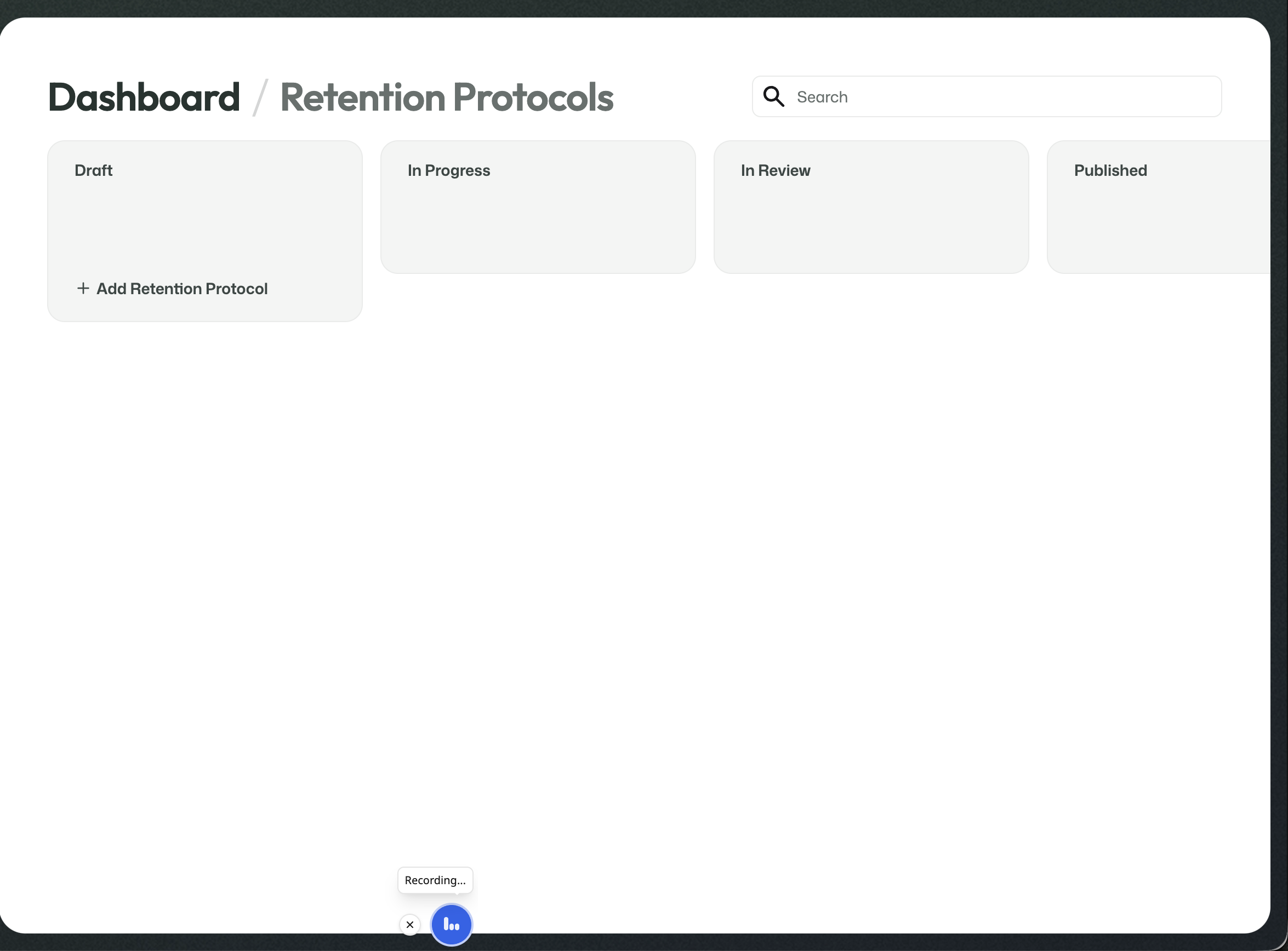
Retention Protocols overview screen.
What this screen is for
This page gives an overview of the Retention Protocols that are available in the current context.
Retention Protocols answer a simple but important question: how long should this information be kept in the archive?
That makes them an important part of lawful and structured information handling. They are used not only to keep information available for the right amount of time, but also later in the lifecycle when information becomes due for removal.
Lifecycle and status
Like several other design-layer components, Retention Protocols move through a lightweight board flow:
DraftIn ProgressIn ReviewPublished
This allows teams to prepare, discuss, review, and publish retention rules before they are reused in broader stream design.
Open and configure a Retention Protocol
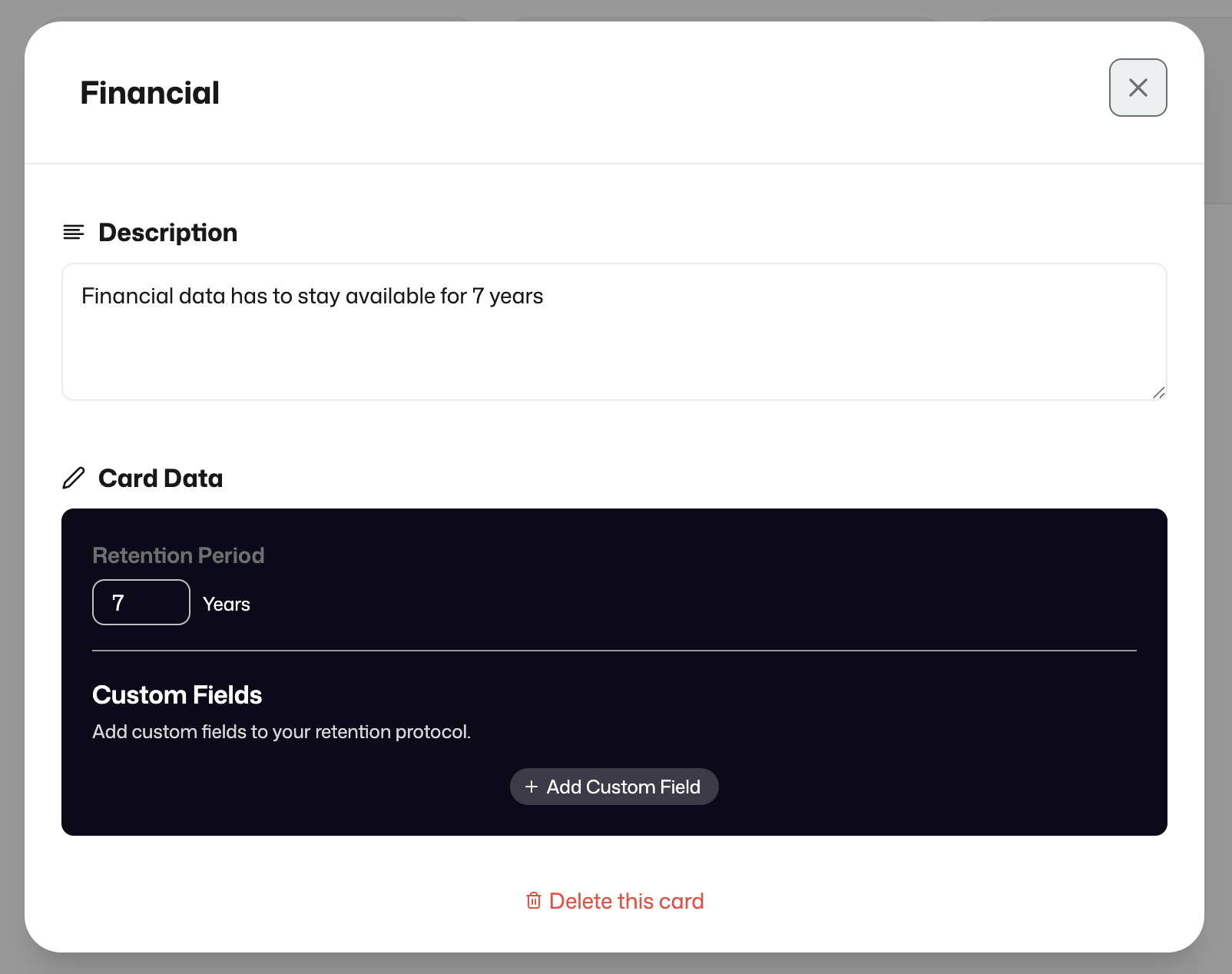
An example Retention Protocol with a seven-year retention period.
When you open a Retention Protocol, you can give it a description and define the retention period itself.
In the example shown here, the protocol states that financial data must remain available for seven years.
Card data
The card data section lets you define the actual retention period used by the protocol.
This is the central value of the protocol, because it determines how long information should remain in the archive before the next lifecycle step becomes relevant.
You can also add custom fields when additional structure is needed for the protocol.
Why this matters
Retention Protocols help organisations keep information for the right amount of time: not less, but also not more than necessary.
They are one of the building blocks ArQiver uses to support compliant archiving and controlled lifecycle management.