
Active streams
Understand and manage a stream after it has been published and is available for use.
Purpose
Once a stream has been published, it becomes an active stream.
At that point, the focus shifts from setup and approval to day-to-day use, visibility, and operational access.
Overview
The Overview tab shows the basic identity and status of the active stream.
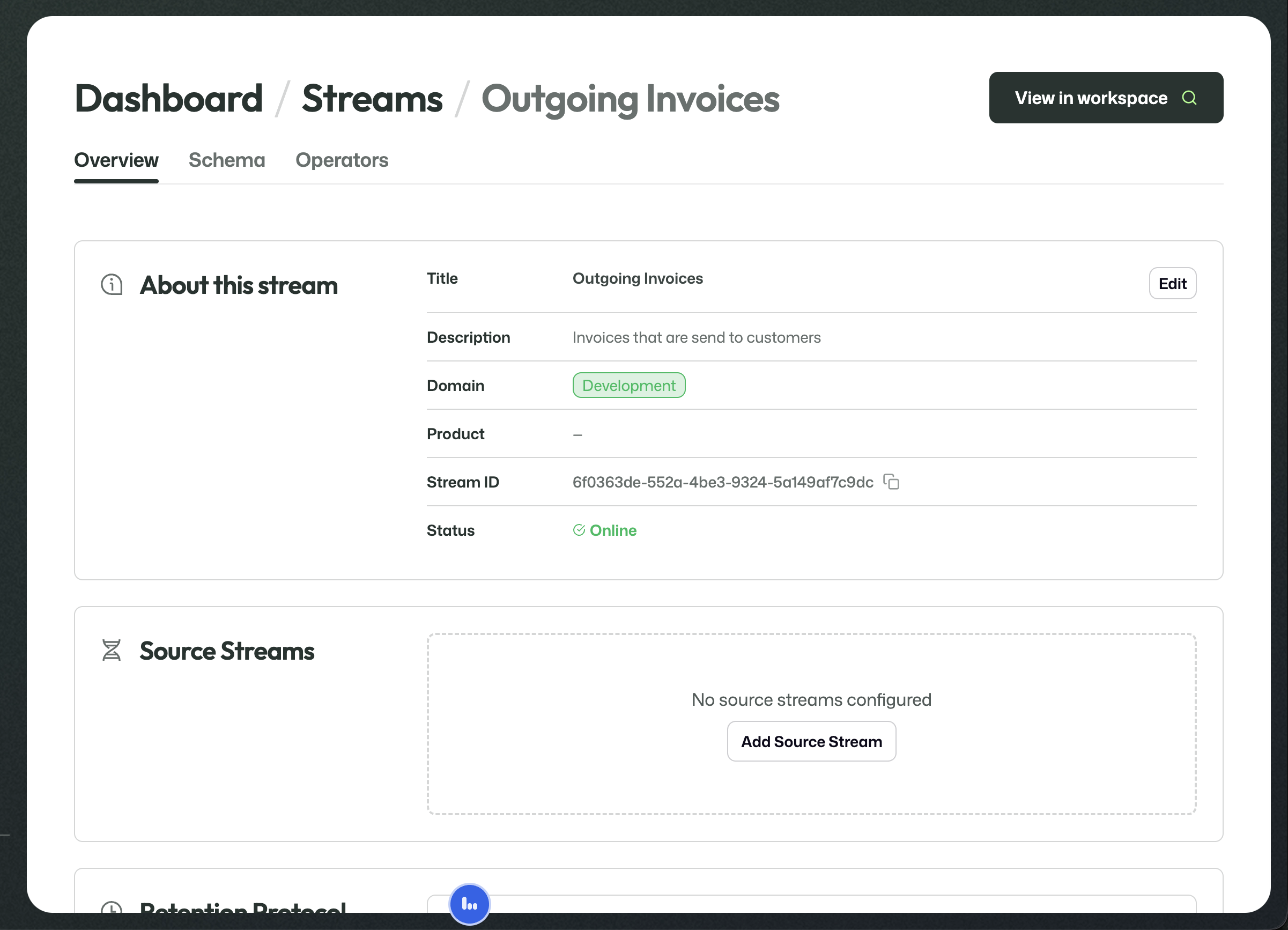
The top of the active stream overview, including title, domain, stream ID, and status.
This gives you the key reference information for the stream, including:
- title and description;
- domain;
- stream ID;
- current status.
Further down the same overview, you can also inspect the lifecycle and sharing configuration that now applies to the active stream.
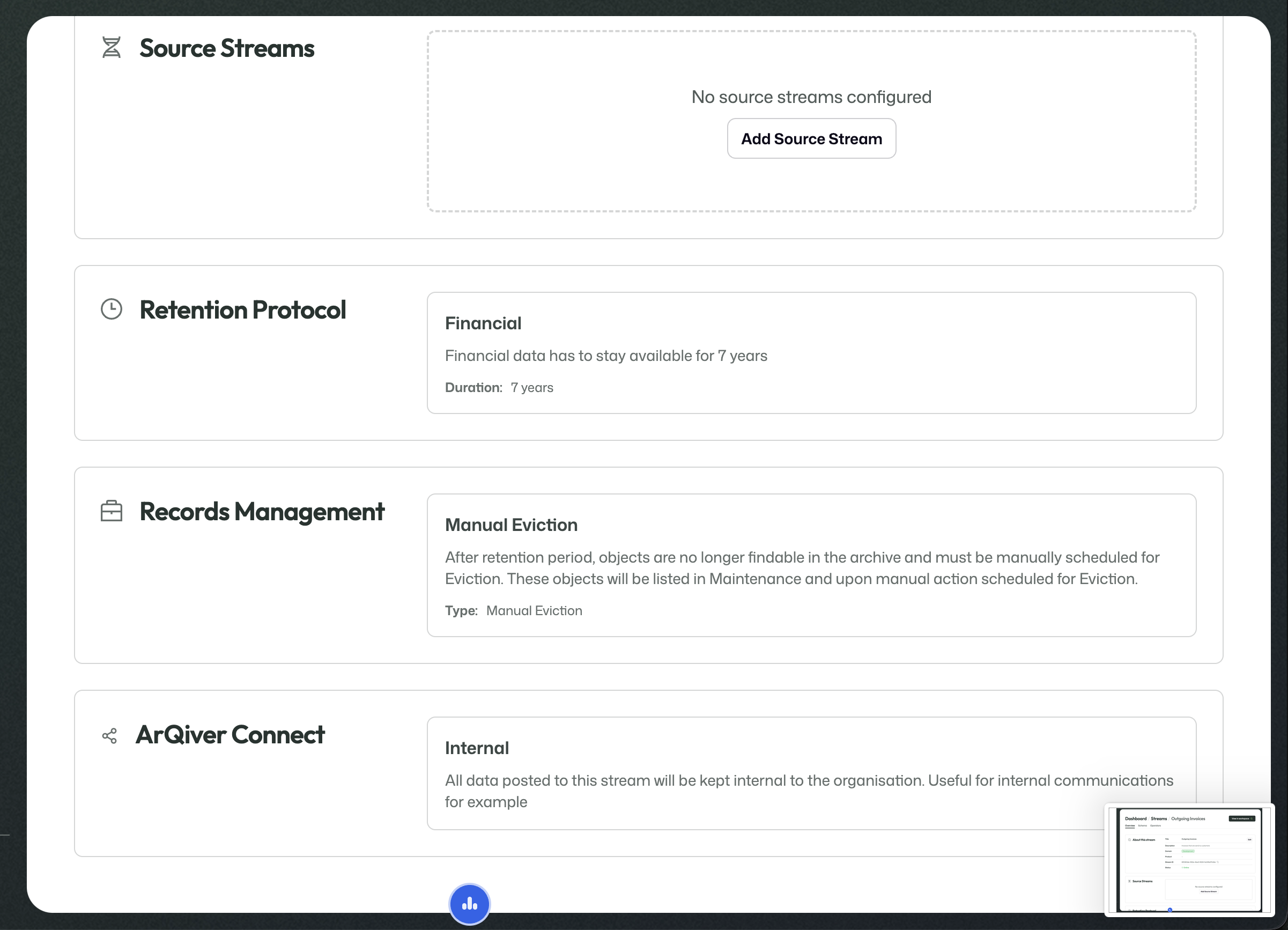
The active stream overview also shows source streams, retention, records management, and ArQiver Connect.
This makes the overview tab a practical summary of how the live stream is configured.
Schema
The Schema tab shows how the active stream is structured.
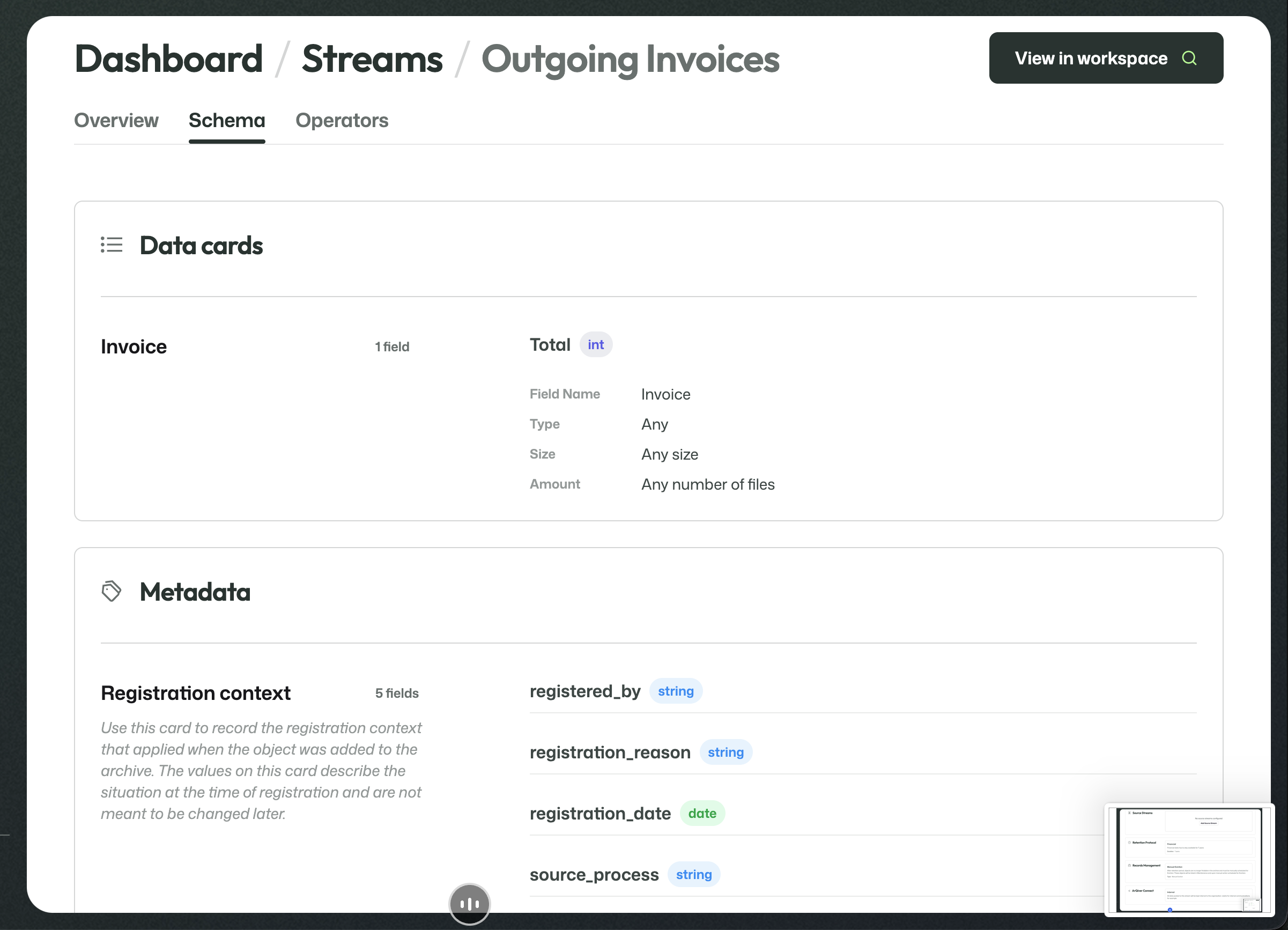
The schema view combines the stream's Data Cards and Metadata Cards into one readable overview.
This is useful when you want to inspect which incoming data and metadata definitions are actually part of the live stream.
Operators
The Operators tab controls who can access data from this stream in the workspace.
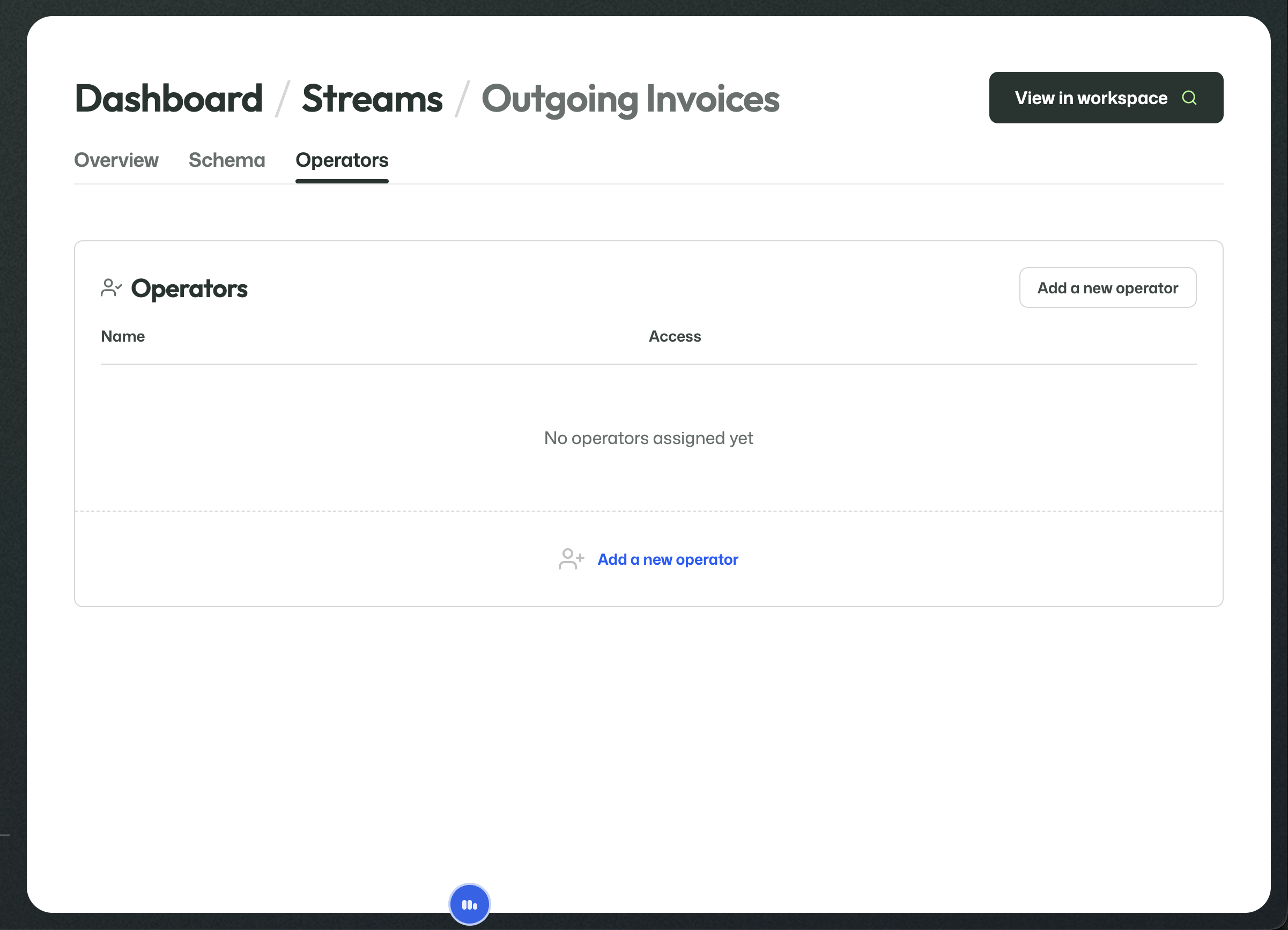
Before any operators are assigned, the stream is not yet exposed through the workspace to an operator user.
An operator must first be added here before they can work with this stream in the workspace.
Add an operator
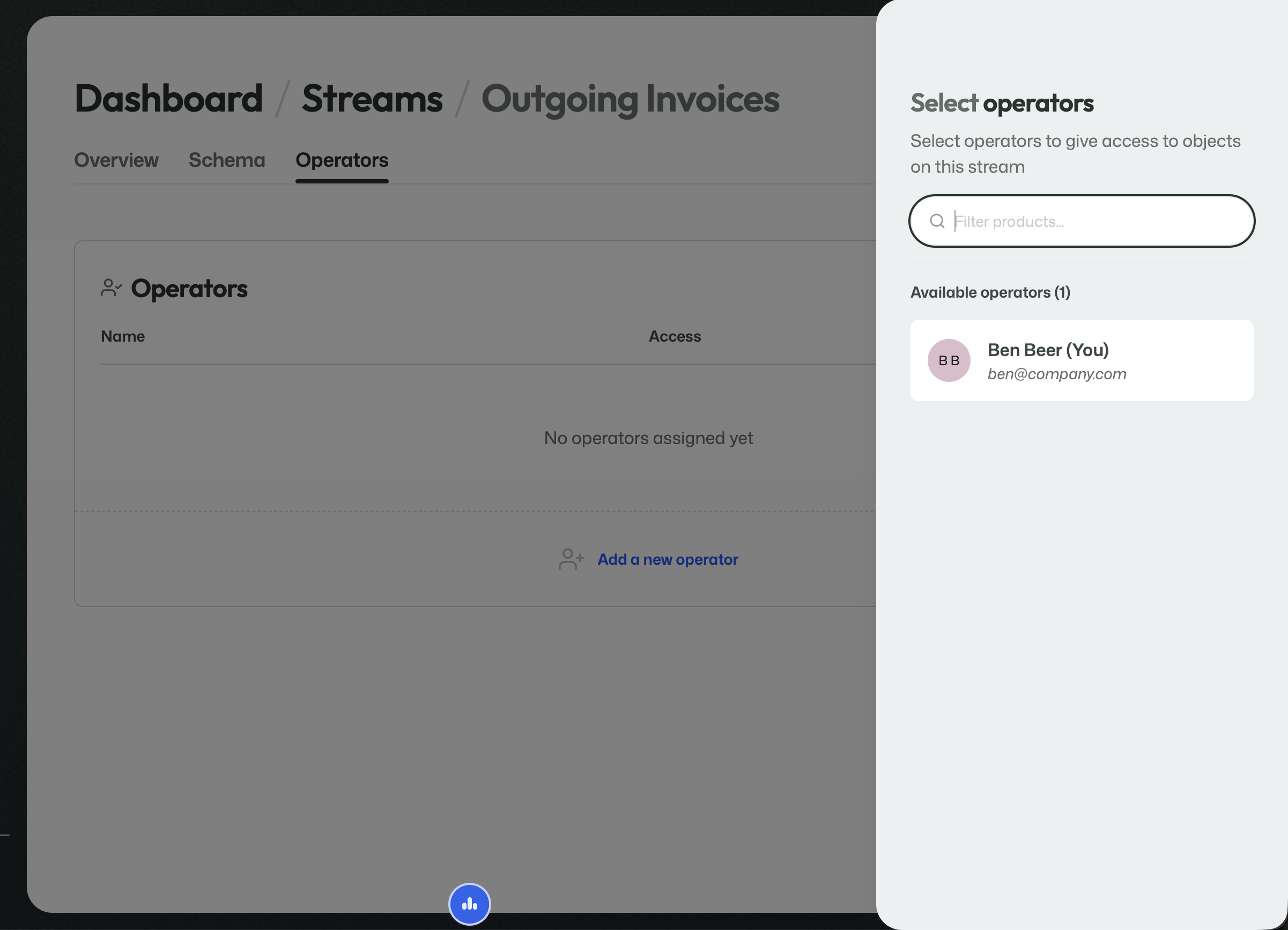
Selecting an operator gives that user access to objects on this stream.
After an operator has been added, the list shows that user and the current access level.
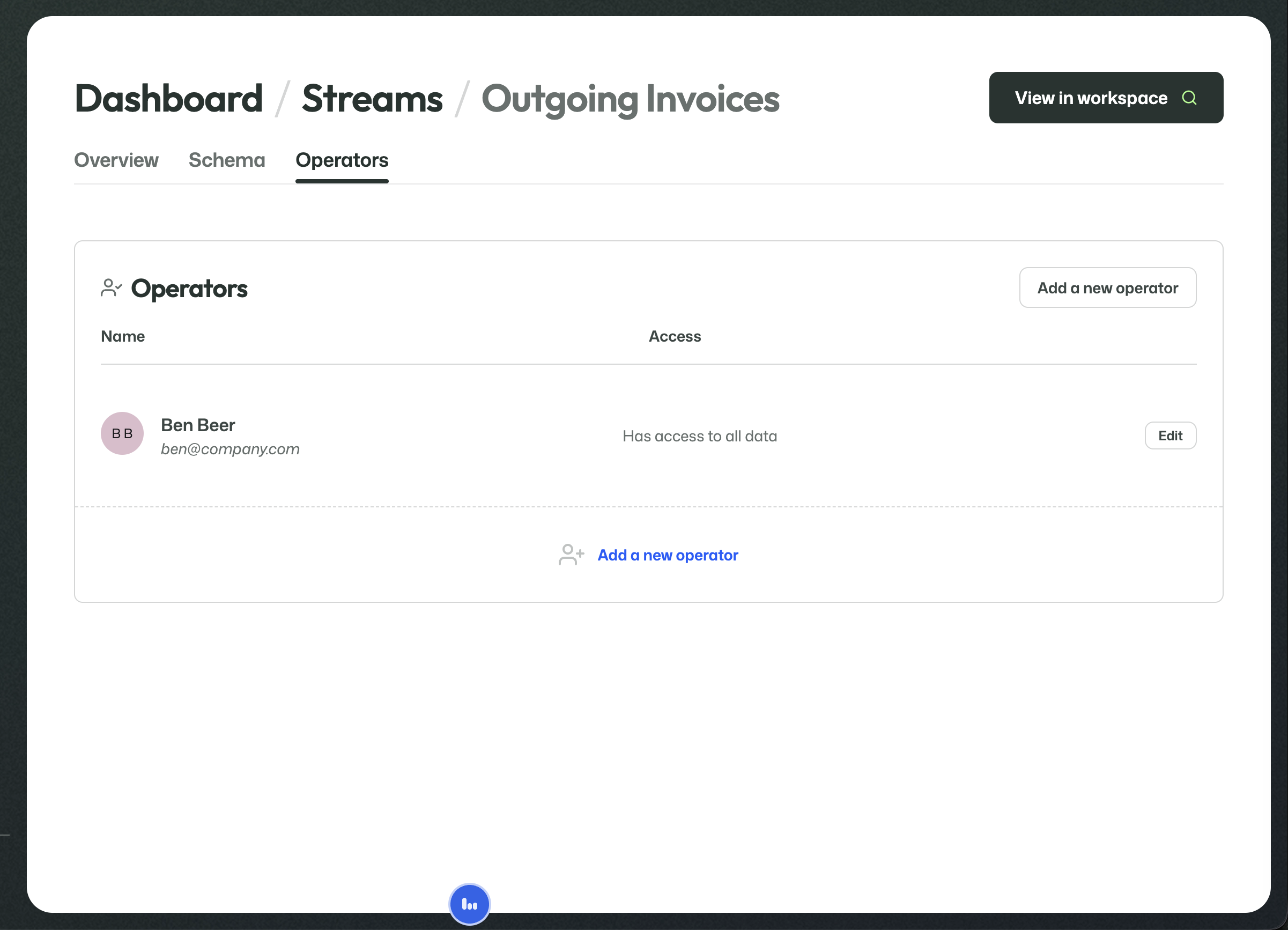
An assigned operator can be granted broad access or refined further.
Attribute-level access
Operator access can be refined in detail.
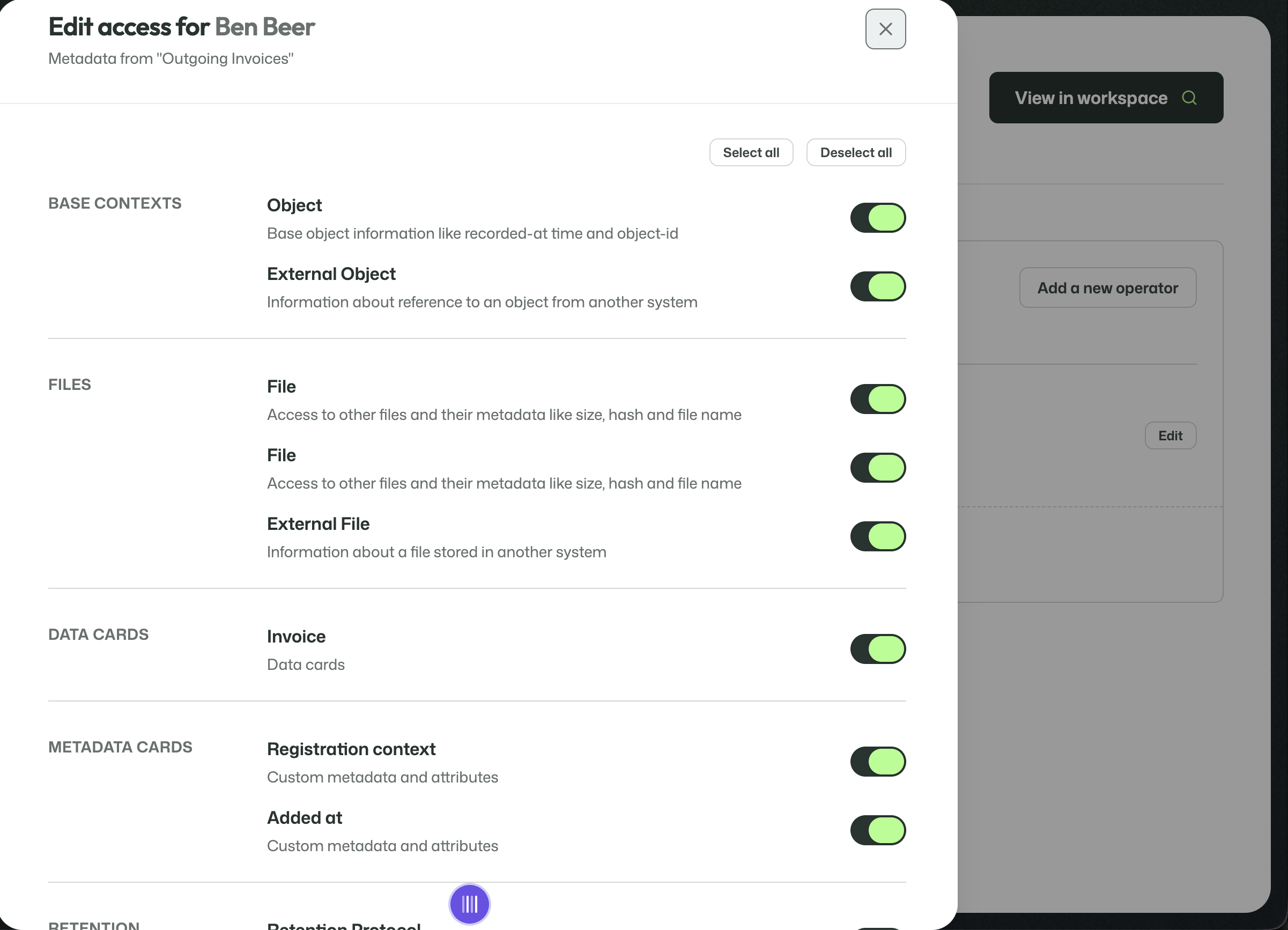
Access can be configured per category, including base contexts, files, Data Cards, Metadata Cards, and retention information.
This means visibility is not only controlled at the stream level. It can also be split out down to the attribute level.
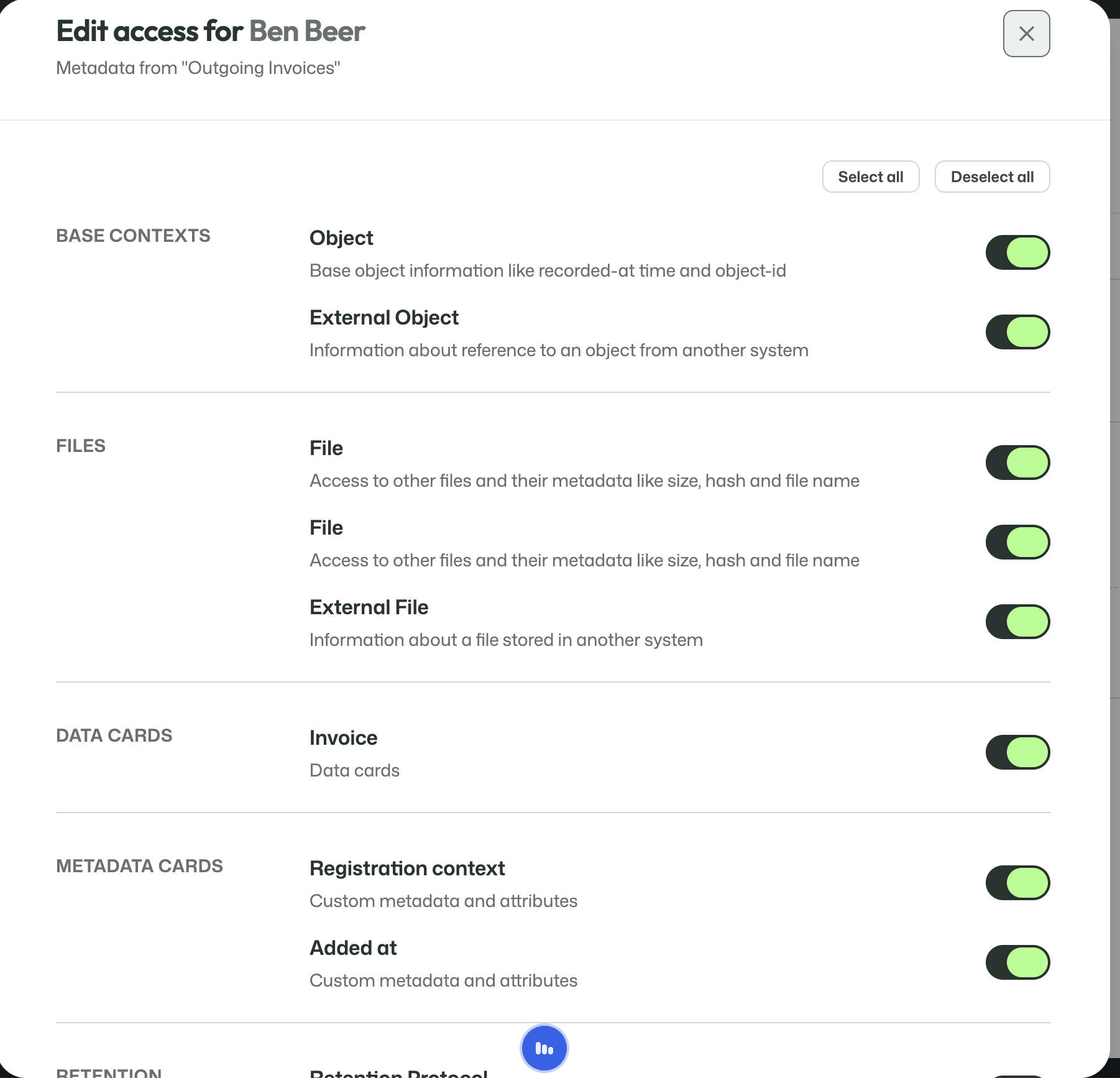
Individual metadata and data attributes can be enabled or disabled for the selected operator.
That allows organisations to expose only the parts of the stream that a given operator actually needs to see.
Workspace
The button View in workspace opens the operator-facing side of the stream.
That is where users search, inspect, and work with the real archived data that has been uploaded into the stream.
The workspace is documented separately because it is a different perspective: not stream configuration, but day-to-day use.